30 October 2025
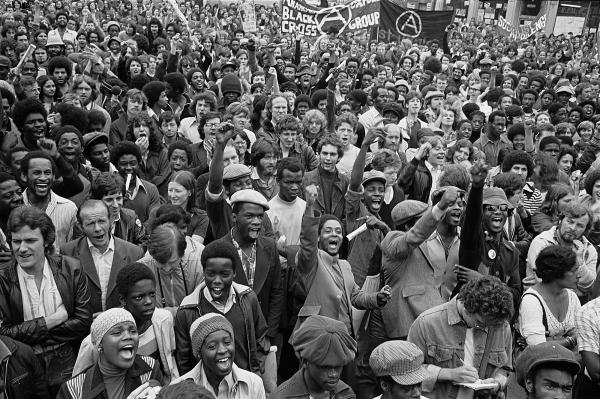
Resistance explores how acts of resistance have shaped life in the UK, and the powerful role of photography in documenting and driving change. For the Spin evening we will be joined by Senior Curator for Photography, Ben Harman.
Conceived by acclaimed artist and filmmaker Steve McQueen, the exhibition brings together works by renowned photographers such as Vanley Burke, John Deakin, Fay Godwin, Edith Tudor-Hart, David Hurn, Tish Murtha, Humphrey Spender, and Paul Trevor, alongside lesser-known photographers who documented these powerful stories. Drawing photographs from various archives, collections and image libraries, McQueen has deliberately focused on moments captured before digital cameras became commonplace.
Presenting a century of activism, Resistance gives a voice to the stories and images from history which have been buried in UK archives until now. McQueen amplifies underrepresented voices to present a compelling exploration of overlooked histories, that will shed light on the forgotten stories of individuals whose contributions have helped define the course of Britain’s history.
29 September 2016

The first Spin event of the new season will be at Stills Gallery, where we will be visiting the exhibition of work by photographer Jo Spence. We will be joined by Roberta McGrath to discuss the various themes of the work on display. Roberta is Associate Lecturer in Photographic Theory and Criticism at Edinburgh Napier University and has close links with Stills Gallery.
Jo Spence (1934-1992) was a British documentary photographer and writer. She typically worked in collaboration, using her camera to address issues such as class, family, sexuality, illness and death. This exhibition presents material from a range of projects on which Spence worked from the early 1970s onwards. These include stark self-portraits, politically-motivated photographs of children, and work by the group Polysnappers, which Spence formed with fellow students at the Polytechnic of Central London in the 1980s. This exhibition reveals the personal and political import of photography as a medium.
29 October 2015
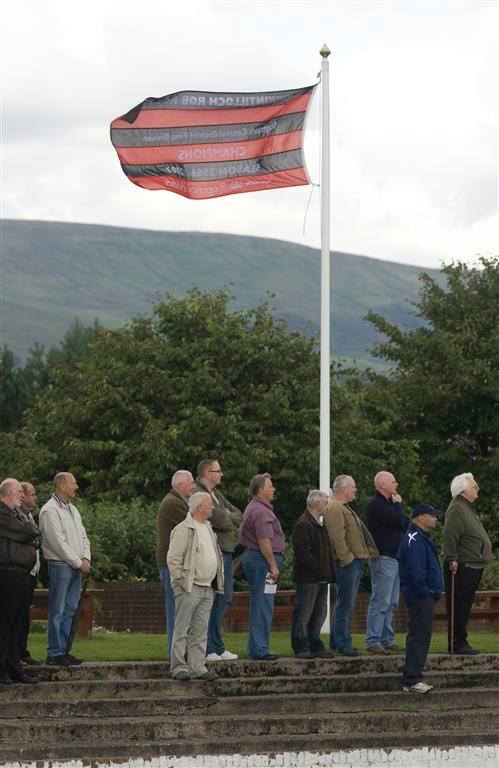
This month we will be exploring the work of the photography collective, Document Scotland comprising Colin McPherson, Jeremy Sutton-Hibbert, Sophie Gerrard and Stephen McLaren. The Ties that Bind is a compelling exhibition of documentary photography by these four Scots-born photographers. The exhibition takes place one year after the Scottish Referendum and features 75 photographs of and about Scotland and its people. While the work touches on the political landscape around the Referendum, the images do not affirm any one position, but seek to present a multiplicity of views that portray the complex changes and subtle nuances surrounding the larger debate.
Jeremy Sutton-Hibbert’s Unsullied and Untarnished focuses on the Scottish Borders area and its traditional summer festivals, known as the Common Ridings. Drawn to the Land is an on-going exploration of contemporary Scottish landscape in which Sophie Gerrard explores the lives of six women farmers working in Argyll, Perthshire, Scottish Borders and the Isle of Mull.
A Sweet Forgetting by Stephen McLaren revolves around the involvement of Scots in the sugar economy of Jamaica in the 18th and 19th centuries which was built on the back of slave labour from Africa. Colin McPherson’s When Saturday Comes explores non-league and grassroots football, looking at the rituals, sense of belonging and the commitment shown by supporters, players and those charged with running clubs from Berwick Rangers to Fraserburgh.
We are delighted to be joined by two of the artists, Jeremy Sutton-Hibbert and Sophie Gerrard, who will give us a valuable insight into their work and the photography collective.
20 May 2009 at 6.30pm
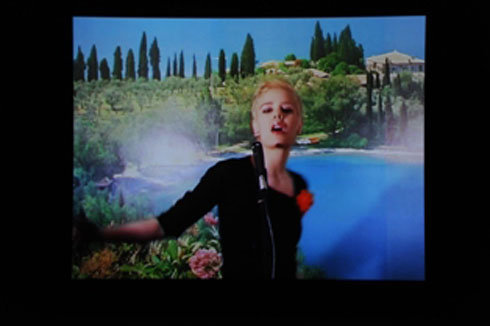
Please join our host Alhena Katsof and curator Claire Jackson to view and discuss Phil Collins’ current solo exhibition, the world wont listen at Tramway.
Phil Collins uses video and photography to negotiate problems of representation by underlining the complex and unpredictable transferences that occur between the producer, the subject and the viewer. He often works in socially and politically contested regions, employing elements of popular culture, low-budget television and reportage-style documentary to articulate a form of critical proximity to contemporary media – both a fascination with and wariness of the ways in which they structure the lived experience itself.
For the exhibition at Tramway, Collins will present the European premiere of his acclaimed three-part video installation the world won’t listen. Filmed in Colombia, Turkey and Indonesia, the trilogy features fans of the influential indie-rock band The Smiths performing karaoke versions of tracks from their 1987 compilation album of the same name. The work has been generously loaned to Tramway by the Dallas Museum of Art, where it premiered in November 2007.
19 September 2007 at 6.30pm
Dani Marti’s practice is stimulated by what we perceive as challenges within the act of portrayal. He is fascinated by what lies behind the surface of the subject as an essence to be grasped or sought after through attempting to represent it. The dialectic between the possibility and simultaneous hopelessness of this endeavour emerges in the abstraction of large-scale woven works, and videos that borrow from the language of documentary.
For Marti, both weaving and (video) taping represent an act of bondage, a ritual which enables the artist to possess the person that is portrayed. The works become representational, not only of states of feelings, but also of regimes of class and power, and the idiosyncrasies of personal psychosexualities.
Dani Marti studied fine art in Sydney, gaining a Master of Arts at the College of Fine Arts, University of New South Wales, in 2000; and in Glasgow, gaining a MFA at the GSA, in 2006.
He will be joining us to talk about his work.


