29 June 2023
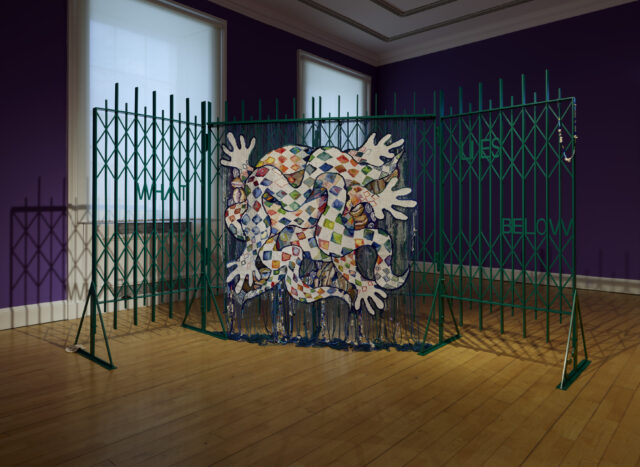
This month we will be heading to the Scottish National Gallery of Modern Art (Modern One) for their new exhibition Alberta Whittle: create dangerously. We will be joined by curator Leila Riszko, whom some will remember as Leila joined Spin in 2022 for both our visit to Barbara Hepworth: Art and Life and Conversations with the Collection.
In her works, Alberta addresses the brutality and harm caused by colonialism, the Transatlantic trade in enslaved people, and the ongoing climate crisis. Through richly symbolic artworks, she pulls apart the belief that ’racism and police brutality is [just] an English problem or an American problem’. Instead she underlines Scotland’s complicity in the structures of white supremacy. Often deeply personal, weaving stories of family and belonging, Alberta ultimately offers a message of hope, asking us to imagine a world outside of these damaging systems and ways of thinking.
This is the largest showing of Alberta’s works to date, with sculptures, digital collages, watercolours and new paintings, made especially for the show, taking over the ground floor of Modern One. Alongside never-before-seen artworks, the exhibition offers you the opportunity to see Alberta’s extraordinary tapestry, Entanglement is more than blood, and film installation, Lagareh – The Last Born – which the artist presented at the Venice Biennale in 2022, commissioned by Scotland+Venice.
26 January 2023
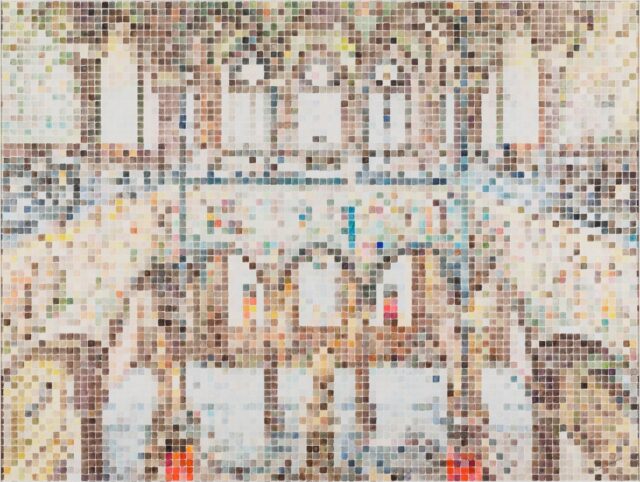
We start the new year with a visit to the Scottish National Portrait Gallery for the second iteration of their colleague exhibition, Artists at Work 2. The exhibition was co-curated by artists Aitor Moncho Tudanca, Darren Duddy, Silvia Barlaam and Victoria Gazeley.
Artists at Work 2 is an exhibition of art created by staff who work at the National Galleries of Scotland. Many talented artists work across the organisation and this exhibition celebrates their creativity. Following the popularity of the first Artists at Work exhibition in 2018, the exhibition highlights a wide range of artistic disciplines, from painting, drawing, illustration and photography to sculpture and jewellery making. The artists introduce their own work and share insights into their creative process through varied perspectives.
24 November 2022
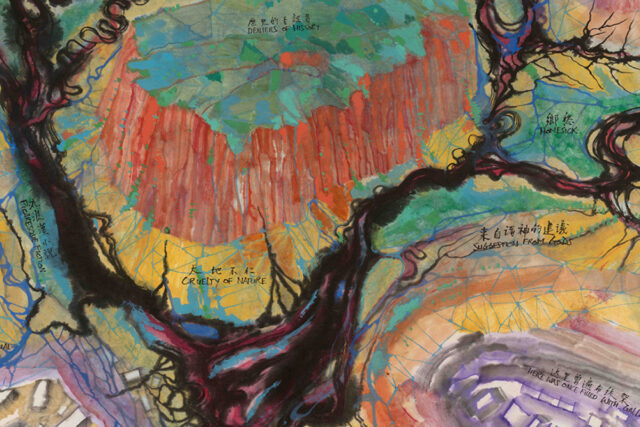
This month we will be returning to the Talbot Rice Gallery for their new show Qiu Zhijie| Lara Favaretto| Nira Pereg, where we will be joined by curator James Clegg.
In the historic Georgian Gallery, Qiu Zhijie presents his first major UK exhibition, including a body of map-paintings informed by remote sensing technology. In the White Gallery, Lara Favaretto’s Momentary Monument takes the form of a monolithic library that will disperse over the course of the exhibition, and upstairs, Nira Pereg’s film installations document a site shared by both Jewish and Muslim worshippers in the city of Al-Khalil/Hebron, Occupied Palestinian Territory.
The works of these three artists reflect on the idea of the monument. Fictional, momentary and paradoxical, their distinct approaches to the concept of ‘”something that reminds” act against the heavy material monuments that proliferate around the world, to describe a more momentary, imaginary or contested space. Sometimes contradictory, sometimes policed, and always characterised by disappearance, these distinct exhibitions reflect upon the fragility of our communion with the past.
30 June 2022
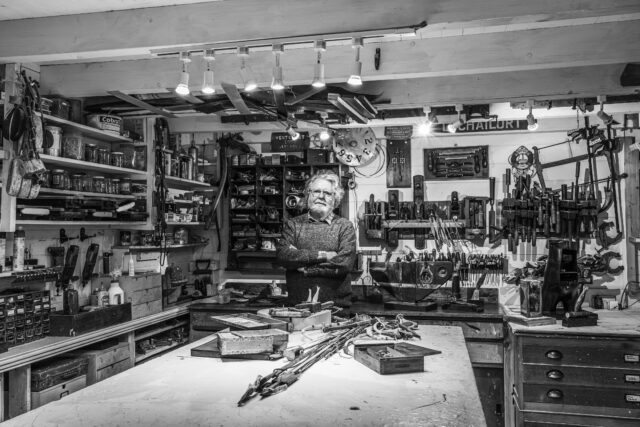
This month we will be heading along to the City Art Centre for their new exhibition Will Maclean: Points of Departure, which is also presented as part of Edinburgh Art Festival 2022. To guide us round this exhibition we will be joined by Curatorial and Conservation Manager, David Patterson, as well as the artist himself, Will Maclean.
Will Maclean (b.1941) is one of the outstanding artists of his generation. His work is anchored in the history, archaeology, and literature of the Scottish Highlands and the Highland people, as well as his family background and personal associations with the sea.
Best known for his wall constructions, this major retrospective will span almost 50 years of work and embrace every facet of his practice – his constructions, drawings, prints, sculptures, artistic collaborations, video productions and outdoor installations. Combining exquisitely hand-made pieces with found or (on occasions) mass produced objects, his work balances between simplicity and complexity and invites the viewer to linger, to admire and to ponder the universal themes which he explores.
Accompanied by a new publication, the exhibition will be drawn from public and private collections, with many of the exhibits going on public display for the first time. The exhibition promises to be a rich visual feast for anyone with an interest in Scottish art and history.
24 February 2022
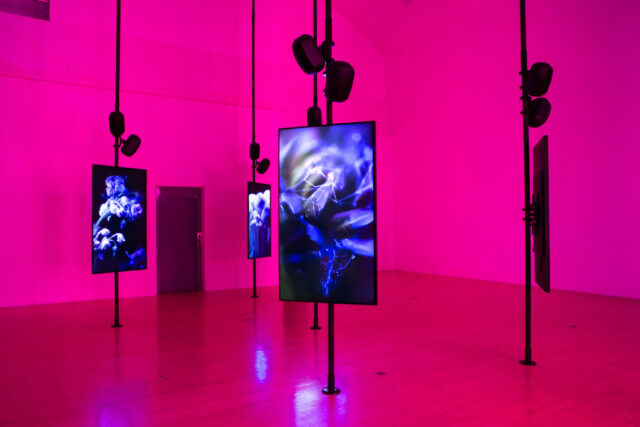
We’re back! Finally for in-person visits to galleries in Edinburgh. This month, we are heading along to the Talbot Rice Gallery for their current exhibition In the Round, where we will be joined by curator James Clegg. This visit will hopefully mark the return of physical visits for 2022.
In the Round is the first major exhibition in the UK of Angelica Mesiti, one of the leading Australian artists of her generation. Building upon her practice, it takes a dynamic journey that extends through historical painting, ancient musical notation, geological specimens and musical instruments. Mesiti consistently returns to communication and translation in her sound, performance and video installations, reflecting the struggle of communities to co-exist. Taking this unique opportunity to combine present concerns with historical research, Mesiti allows her artworks to echo through ancient objects and to materialise in new works made for this expansive exhibition.
31 October 2019

This month we will be heading to the Gallery of Modern Art for the sixth and final instalment in their series of NOW exhibitions. The exhibition will focus on the work of Glasgow-born artist Katie Paterson (b.1981). A graduate of Edinburgh College of Art and Slade School of Art, London, Paterson’s work is developed through long periods of research and collaboration with specialists in scientific and other fields from around the world, creating intimate, poetic works that connect people with the environment around them.
The first major showing of Paterson’s work in a public institution in Scotland, the exhibition will explore key themes to her work such as deep time and the cosmos. The exhibition will feature the installation work Totality (2016), a large-scale mirror ball created from almost all known images of solar eclipses captured by humankind, and Light Bulb to Simulate Moonlight (2008), held in National Galleries of Scotland’s collection.
NOW also features work by Darren Almond, Shona Macnaughton and Lucy Raven. The artists’ work shares thematic ties with that of Paterson’s and will be shown within the surrounding gallery spaces.
Joining us to discuss Paterson’s work is Professor Andrew Patrizio from the University of Edinburgh. Andrew specialises in contemporary art exploring Scottish art since 1945 and on art, ecology and the environment.
29 November 2018

This month we invite you to see Tremble Tremble by Jessie Jones, the Irish representation at the 2017 Venice Biennale, installed in the Talbot Rice Gallery. We will be joined by assistant curator James Clegg who will introduce the exhibition.
Approaching modern gender politics through a dramatic aesthetic, Jesse Jones’ piece evokes a multitude of associations, cultural links and triggers. For the making of this work, Jones drew from recognisable political references, such as the very title. Tremble Tremble references the 1970s Italian women’s protest of the same name, which called for wages for housework. Referring to the medieval prosecution of witches and also to the historic Repeal the 8th movement in Ireland this summer, she has created a layered and dense visual narrative which sits somewhere between theatre, film and sculpture.
The group exhibition At the Gates is shown alongside Jones’ work and consists of work by fellow women artists exploring feminism, self-empowerment and current social and political events. Often brushing up against the law, or institutions of power, these artists and their projects demonstrate the impact art can have when it becomes part of a public discussion.
25 October 2018

This month we will visit the fourth phase of the contemporary art exhibition series NOW which opens on Saturday 20 October at the Scottish National Gallery of Modern Art. Senior Curator Dan Brown will meet us there and offer us an insight into the production of this group exhibition and the practice of the artists represented.
Previous editions of NOW have shown work by Nathan Coley, Susan Philipsz and Jenny Saville (amongst many others), this instalment is built around the work of Turner Prize nominee (2012) Monster Chetwynd. Renowned for using diverse cultural and historical sources to create performative work, sculptural installation and video, Alalia Chetwynd was born in London in 1973; she later adopted the name Spartacus Chetwynd, then morphing into Marvin Gaye Chetwynd before earlier this year becoming Monster Chetwynd. She studied Anthropology and holds a BA in Fine Art from Slade School of Art (London). In 2002, she completed her studies with an MA in Painting at the Royal College of Art, London.
Until 28 April 2019, Chetwynd’s work, including collage and painting, will be on show at Modern One surrounded by the work of four international contemporary artists: Moyna Flannigan (Scotland), Henry Coombes (Scotland), Betye Saar (USA) and Wael Shawky (Egypt). Although working in diverse mediums and with different approaches all these artists share a desire to challenge convention.
30 November 2017

This month, we will be exploring the work of the acclaimed artist and filmmaker, John Akomfrah. Vertigo Sea (2015) is a three-screen film installation that draws together archival footage, literary sources and newly shot footage, weaving together narratives of slavery, whaling and the current refugee crisis. Initially prompted by a radio interview with a group of young Nigerian migrants who had survived an illegal crossing of the Mediterranean, it expresses the vast beauty and cruelty of the sea. Vertigo Sea was filmed in Skye, the Faroes, Norway with the BBC Natural History Unit and at its core are two remarkable books: Herman Melville’s Moby-Dick (1851) and Heathcote Williams’ epic poem, Whale Nation (1988). Vertigo Sea was one of the standout works at the Venice Biennale in 2015.
Also on show is a video and sound installation – At the Graveside of Tarkovsky (2012) – a meditation on disappearance, memory and death and an ode to the Russian director Andrei Tarkovsky who inspired Akomfrah as a young filmmaker.
26 October 2017

This month, we will be exploring the work of two contemporary artists – Graham Fagen and Douglas Gordon – who have made work in response to the poet Robert Burns (1759-1796).
First shown at the 2015 Venice Biennale, Graham Fagen’s The Slave’s Lament is centred on the 1792 Robert Burns song of the same name as well as drawing our attention to an episode in Burns’ life. In 1786, Burns books a passage to Jamaica to escape economic problems with the aim of becoming a book-keeper on a slave plantation. At the very last moment, news that his recently published first book of poems has been well received changes his mind. In 1792, he pens The Slave’s Lament, his only work that empathises with the suffering of the displaced, the trafficked and the enslaved.
The centrepiece of the installation is The Slave’s Lament, a 4-channel video work in which classical composer Sally Beamish has created an extraordinary interpretation of Burns’ work. Performed by musicians from the Scottish Ensemble, music producer Adrian Sherwood, and the reggae singer and musician Ghetto Priest, it is a chilling reminder that Burns might once have become involved in the very suffering that inspired the lament.
In the Great Hall of the Portrait Gallery stands John Flaxman’s famous 1824 marble statue of Robert Burns. Originally housed in Thomas Hamilton’s Greek revivalist Burns Monument to the south of Edinburgh’s Calton Hill, the sculpture occupies pride of place in the gallery. In a specially commissioned installation, Turner-Prize winner Douglas Gordon confronts this monument to Burns by creating a full-sized replica in black marble, smashed into pieces, lying on the floor. Gordon has long explored the divided psyche in his work and seeing Burns fallen from his pedestal, dark and flawed, the inner man is revealed.
‘With Black Burns, I don’t know if it’s a shattered portrait of a man or a portrait of a shattered man.’ Douglas Gordon.
Joining us to discuss both works will be Susanna Beaumont, a curator, mentor and advisor and founder director of doggerfisher (2000-2010).


