Tag Archives: print

Conversations with the Collection

This month we will be joined by NGS curators Emma Gillespie and Leila Riszko who will introduce us to Conversations with the Collection – a changing programme of displays which offers a new way to experience the national collection.  

Each room bring to light rarely displayed yet fascinating artworks and stories. Works have been selected to create bold juxtapositions and visual similarities between artworks, styles and movements to offer a fresh take on how works of art can be presented and share the stories they tell. The aim is to unearth evocative stories and unexpected connections between artists and encourage a sense of openness and discovery. 

Talking points are encouraged and explored by covering a wide mix of techniques, processes and approaches, ranging across sculpture, painting, photography and more. Iconic works by famous artists such as Anish Kapoor, Sarah Lucas, Jackson Pollock, Tracey Emin and Cindy Sherman are on display alongside those by brilliant but lesser-known figures including Carole Gibbons and Catherine Yarrow.  

Each display explores a unique theme or topic with the thematic displays placing conversation at their heart in a bid to inspire conversations with the collection. 
Will Maclean: Points of Departure

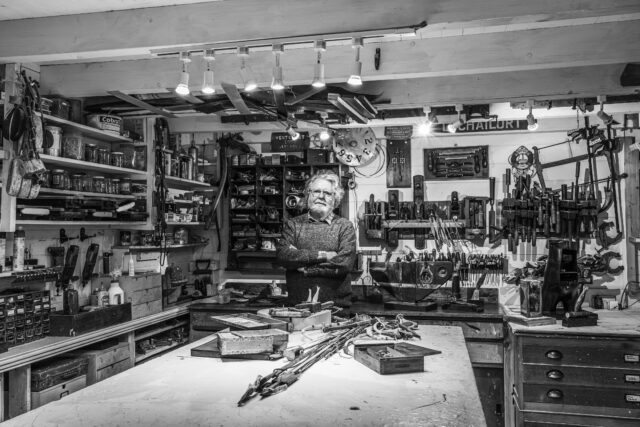
This month we will be heading along to the City Art Centre for their new exhibition Will Maclean: Points of Departure, which is also presented as part of Edinburgh Art Festival 2022. To guide us round this exhibition we will be joined by Curatorial and Conservation Manager, David Patterson, as well as the artist himself, Will Maclean. 

Will Maclean (b.1941) is one of the outstanding artists of his generation. His work is anchored in the history, archaeology, and literature of the Scottish Highlands and the Highland people, as well as his family background and personal associations with the sea. 

Best known for his wall constructions, this major retrospective will span almost 50 years of work and embrace every facet of his practice – his constructions, drawings, prints, sculptures, artistic collaborations, video productions and outdoor installations. Combining exquisitely hand-made pieces with found or (on occasions) mass produced objects, his work balances between simplicity and complexity and invites the viewer to linger, to admire and to ponder the universal themes which he explores. 

Accompanied by a new publication, the exhibition will be drawn from public and private collections, with many of the exhibits going on public display for the first time. The exhibition promises to be a rich visual feast for anyone with an interest in Scottish art and history. 

Katy Dove and Victoria Morton

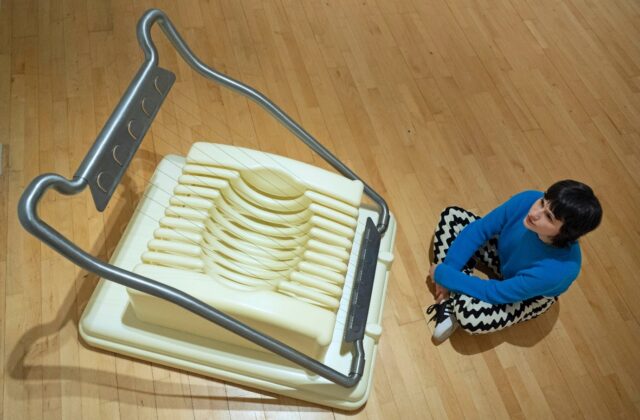
Sun By Ear is an exhibition of new drawing, painting, print, animation and sound in Tramway’s main gallery space by two of Scotland’s most intriguing contemporary artists, Katy Dove and Victoria Morton, showing together for the first time.

In a stunning installation design by Glasgow-based architects Collective Architecture, Sun By Ear sees the 1030msq gallery transformed to encourage an experience of Katy Dove and Victoria Morton’s artworks as both connected and discrete, retaining the autonomy of each art work, whilst highlighting the artists’ overlapping concerns.

Katy Dove describes experience using animation, sound, drawing and painting. The starting point could be a piece of improvised music made with friends, a walk, or an open-ended drawing. Experiential reference points allow the viewer access to the work through their own experience, in the moment with no prior knowledge necessary.

Victoria Morton’s recent paintings have faces and animated parts, street corners, rooms and activity. They follow impulses of the body and the structures of internal and external spaces. She considers painting a way of registering daily experience in bouts of intense concentration.

Katy Dove (1970) studied Psychology at University of Glasgow and Sculpture at Duncan of Jordanstone College of Art, Dundee. In 2006, she had solo shows at Hales Gallery London and Talbot Rice Gallery, Edinburgh. In 2003 she was one of the artists selected to represent Scotland in Zenomap at the 2003 Venice Biennale.

Victoria Morton (1971) is based in Glasgow and Fossombrone, Italy and is represented in the UK by The Modern Institute, Glasgow and Sadie Coles HQ, London. She studied painting at The Glasgow School of Art and graduated from the School’s Master of Fine Art (MFA) course in 1995. Recent exhibitions include a solo show at Bonner Kunstverein, Bonn, Germany (2004), and Edge of the Real, (group show), Whitechapel, London ( 2004).

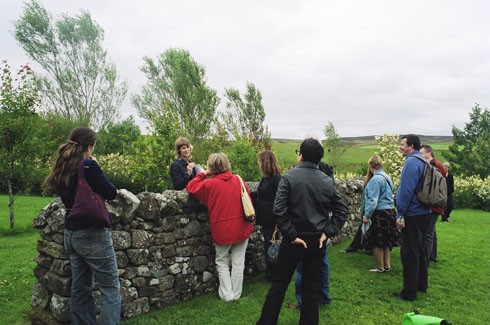
Spin-Off Trip to Little Sparta

The sun is shining, the days are long; every now and then, there is the distant sound of police and protestors clashing. It is an appropriately surreal and extreme time to head to Little Sparta. The idyllic sculpture garden, surrounding a wee croft in the southern uplands of Scotland, is studded with references to the philosophical values of the French Revolution and the techniques of modern warfare. It still resonates with the noises of the Little Spartan War 1983 (the Follies War and the French War were to follow later). Finlay clashed with Strathclyde Region over its bureaucratic bungling of a rates dispute; and the sheriff officer and his men staged two raids on the Finlay’s Garden Temple. Although they were repelled by Finlay’s supporters (the Saint-Just Vigilantes) in the first battle, the sheriff and his men succeeded in seizing several works in the second onslaught. Nor was Finlay mellowed by experience – he went on to have further fights ‘on principle’ with the National Trust for Scotland and the French Ministry of Culture, as well as half of the people he ever worked with.

Ian Hamilton Finlay‘s uncompromising commitment to ‘beauty’ and classical rigour may not have won friends, but it did produce the most uniquely distinctive and challenging body of work in Scotland in the last century. Finlay is a concrete poet first and foremost, and has been a prolific collaborator with many different artists, craftspeople and poets with whom he has created an extensive collection of sculptures, prints and books. His public art works are to be found in cities all over the world and many of his works will be on display in three co-ordinated exhibitions in Edinburgh over the summer: at the Ingleby Gallery, Inverleith House and the Scottish Poetry Library. But there is no doubt that the heart and soul of Ian Hamilton Finlay’s work will always be the garden at Little Sparta.

Spin members were invited to join an exclusive bus trip to the garden, to uncover the complex threads and hedonistic delights of Finlay’s work.