25 April 2019

We pay a return visit to the Scottish National Portrait Gallery to discuss three of the 20th century’s most influential photographers: Francesca Woodman, Diane Arbus and Robert Mapplethorpe.
Drawn from the ARTIST ROOMS collection jointly owned by the National Galleries of Scotland and Tate, Self-Evidence brings together a selection of work by the these three American photographers to explore the idea of a self-portrait.
Curated by Annie Lyden, international photography curator at the NGS, the photographs date from the 1960s to the 1980s and cover a period of profound societal change and shifting attitudes towards issues such as women’s rights and homosexuality.
Each of the photographers have explored portraiture in different ways; Woodman’s images are experimental and address an inner mental state. Arbus chose not to represent herself but those around her in her portfolio, A Box of Ten Photographs, 1969-1971. And Mapplethorpe portrays himself in varying guises as well as recording the final ten years of his life.
29 September 2016

The first Spin event of the new season will be at Stills Gallery, where we will be visiting the exhibition of work by photographer Jo Spence. We will be joined by Roberta McGrath to discuss the various themes of the work on display. Roberta is Associate Lecturer in Photographic Theory and Criticism at Edinburgh Napier University and has close links with Stills Gallery.
Jo Spence (1934-1992) was a British documentary photographer and writer. She typically worked in collaboration, using her camera to address issues such as class, family, sexuality, illness and death. This exhibition presents material from a range of projects on which Spence worked from the early 1970s onwards. These include stark self-portraits, politically-motivated photographs of children, and work by the group Polysnappers, which Spence formed with fellow students at the Polytechnic of Central London in the 1980s. This exhibition reveals the personal and political import of photography as a medium.
24 November 2011 at 6pm
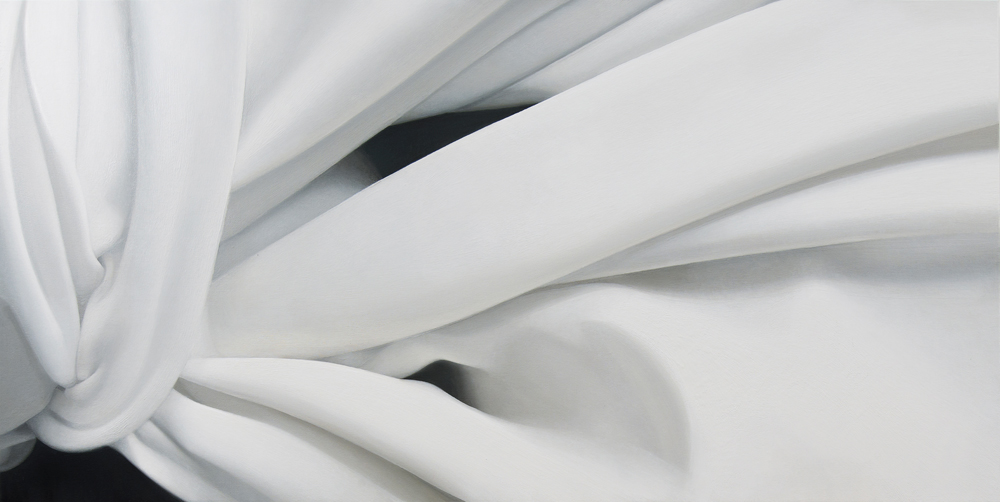
Hiding in Full View is a new series of paintings by Alison Watt in which she has been looking at the work of the American photographer Francesca Woodman (1958-98), taking indirect inspiration from the almost hypnotic imagery of Woodman’s intense and dreamlike tableaux.
In the spring of last year Alison Watt was commissioned by the Uffizi Gallery in Florence to make a work for their celebrated collection of self-portraits by women artists. This was an unusual commission, not least because it came nearly 15 years after Watt had last painted the human figure. Since relinquishing the figure in 1997, she has edged towards abstraction, painting swathes of fabric suggestive of both a human presence and absence. During her time spent at the Uffizi Gallery, Watt found herself looking closely at the photographs of Woodman, fascinated by the way that she used the object in her self portraits and how the two elements of self and object often merge.
If it was possible to create a painting that was difficult to identify and at the same time incredibly intimate, that was what I wanted to do – Alison Watt
Joining us in discussion will be Roberta McGrath who is Associate Lecturer in Photographic Theory and Criticism at Edinburgh Napier University. Roberta has published widely on the theory of the image and questions of representation, and has published “Seeing Her Sex: Medical Archives and the Female Body” (Manchester University Press, 2002) which focuses on issues of sexed subjectivity through visual representations of the reproductive female body made between 1750-1910.
27 September 2007 at 6pm
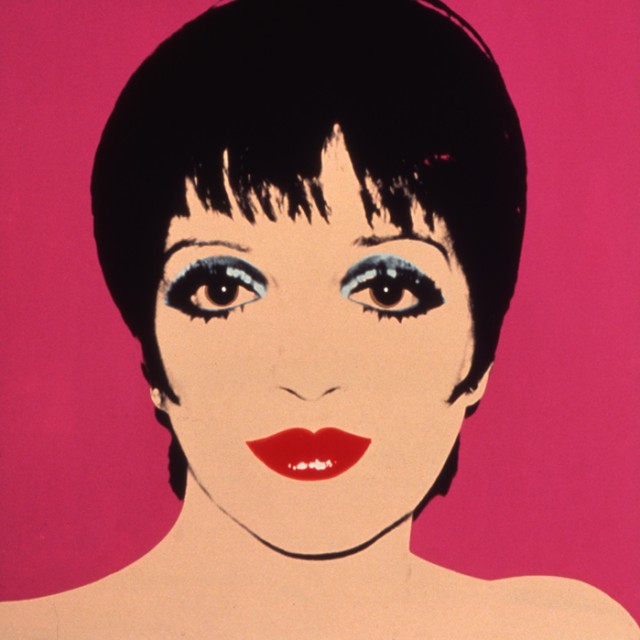
This is the second major exhibition of works by Andy Warhol to be staged in Edinburgh within the last two years. While Andy Warhol: Self-Portraits, held at the Scottish National Gallery of Modern Art (SNGMA) in 2005, was devoted to only one of Warhol’s intriguing subject matters, Andy Warhol: A Celebration of Life . . . and Death spans four decades and encompasses his eclectic style.
This major retrospective, curated by Keith Hartley, Chief Curator and Acting Director of the SNGMA, is a rare opportunity to meet Warhol through his work in illustration, printmaking, photography, sculpture, painting and film. Unless you are fortunate to visit Warhol’s museum in Pittsburgh, youll find it hard to source such a well curated exhibition.
Whether you admire or loathe the work of Warhol, there is no escaping his influence on twentieth-century western culture.
For this event, we are going to explore the exhibition in a random style with a slight twist to our usual proceedings. Meeting us part of the way will be the art historian and critic, Jean Wainwright, a leading authority on Warhol who recently completed her PhD on Warhols audio recordings.
25 February 2005 at 6pm

Celebrity, glamour, icons repeated; this is what we think of as Andy Warhol‘s defining work. It made him as famous as his superstellar subjects. But Warhol was prolific for many decades and there is a lot more to him than a few (perhaps overexposed) images. Ranked alongside Picasso and Duchamp as a 20th-century giant, Warhol’s importance is measured by the impact his work has had on a vast range of artists since the 1960s. He deals with the big questions – identity, death, love and pain. Yes, his deadpan persona was the epitome of 1960s ‘cool’; but genuine pathos and humanity run through the works. The humane side of Warhol is becoming more visible now, and this exhibition of self-portraits is a revelation – more stimulating and poignant than you might expect.
One person who knows Warhol’s legacy better than most is Jean Wainwright. An art historian and critic based in Kent, Jean has been given unique access to Warhol’s private audiotapes and his time-capsule boxes – all now housed in the artist’s archive in Pittsburgh.
The CAS members travelled to Pittsburgh recently and it was Jean that arranged for Warhol’s now elderly brother to show them round the places he and Andy frequented as kids. He had never spoken in public before. Jean is a colourful character in her own right, so don’t miss the opportunity to see the show in her company.


