Tag Archives: Turner Prize

Off The Wall

Welcome to a New Year of inspiring Spin events featuring gallery talks, studio visits, Spin-Off trips, art news and invitations to exclusive private views. We would also like to welcome back Suzanne Dunn from maternity leave as our Spin Co-ordinator.

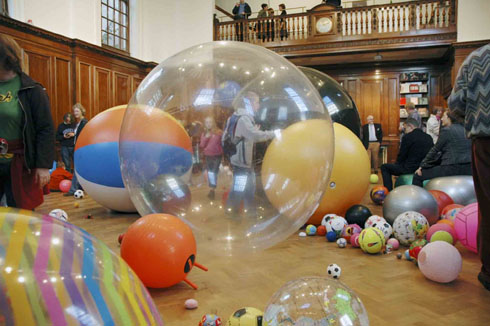
January’s gathering will take place at the Scottish National Gallery of Modern Art with Off the Wall. As the title suggests, this is an exhibition of floor and ceiling-based works by a host of respected artists including the American hero of minimalism, Sol Le Witt, and some of Scotland’s most valued contemporary artists – Turner Prize nominees Martin Creed, Jim Lambie and Christine Borland, and Nathan Coley.

Off The Wall not only investigates the realm of modern-day sculpture, it also provides an opportunity for the SNGMA to present their more recent acquisitions. We will look the practicalities of site-specific work in collections, for example how realistic is Lambie’s ZOBOP when it must be recreated each time it is installed?

Considering the impact of sculpture or site work in the 20th-century, we will look at the role of the curator and deliberate their contribution as collaborator. We will also explore the issues of purchasing power and what these newly acquired works bring to our nation’s rich collection of visual art.
Douglas Gordon: Superhumanatural

‘I provide the board, the pieces and the dice, but you are the ones that have to play.

Douglas Gordon

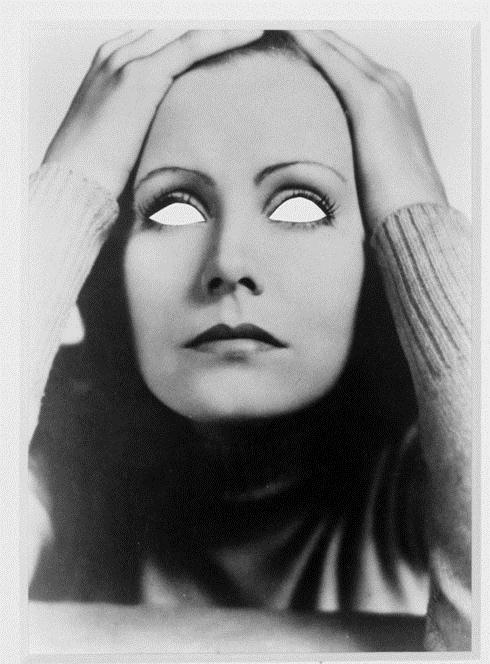
We will be visiting the much-anticipated retrospective exhibition by Douglas Gordon, one of Scotland’s most celebrated contemporary artists. And it doesnt disappoint.

The Royal Scottish Academy Building has been transformed beyond recognition with specially constructed blacked-out spaces, TV monitors and installations where the familiar becomes unfamiliar. Superhumanatural is Gordon’s first retrospective exhibition to be held in Scotland and features key works including 24 Hour Psycho (1993), Through a Looking Glass (1999) and 30 Seconds Text (1996).

Born in Glasgow in 1966, Douglas Gordon was among a number of Glasgow-based artists who embraced a more conceptually-orientated art in the 1990s. His deployment of pre-existing material, most notably in his use of Hitchcock’s iconic film in his work 24 Hour Psycho, attracted particular attention. He won the Turner Prize in 1996, the Premio 2000 at the Venice Biennale in 1997 and the Hugo Boss Prize at the Guggenheim Museum, New York in 1998. Earlier this year, he had a mid-career survey exhibition at the Museum of Modern Art in New York.

Working in video, film, photography, audio and text-based works, he explores themes of trust, guilt, confession, deception and doubling. Many of his works are based on dichotomies – good and evil, life and death, birth and death, perception and memory and seduction and violence.

This is a great opportunity to see a major exhibition of his work. We will be joined by Keith Hartley, curator of the exhibition and Chief Curator and Deputy to the Director at the Scottish National Gallery of Modern Art. Keith, who was the exhibition curator, has been working on the show for a few years and will be able to provide us with a fascinating insight into the works and the man himself.

Black Box

We are delighted that this month’s Spin date coincides with the opening of the Festival show at Edinburgh College of Art, BLACK BOX. All members have been invited to join the opening party from 6-8pm in the College. This is a great opportunity to see the work before the exhibition opens to the public, and although there will be no formal discussion, Kirstie Skinner and Emma Nicolson look forward to chatting to members informally over drinks.

BLACK BOX is a collaboration organised by Edinburgh College of Art (eca) and the Edinburgh International Film Festival (EIFF), consisting of four acclaimed film installations by internationally-acclaimed artists: Turner prize nominees Jane and Louise Wilson (1999); Isaac Julien (2001); Italian artist Francesco Vezzoli and US-based artist Malerie Marder.

Jane and Louise Wilson present Gamma: a multi-screen installation that was shot at Greenham Common, the American military base in Berkshire which stored cruise missiles during the cold war. The abandoned nuclear installations and institutional architecture appear sinister and surreal in equal measure.

First exhibited in Germany at Documenta 11, Paradise Omeros by Isaac Julien is a semi-autobiographical narrative set on two island settings, St. Lucia and Britain in the 1960s. Julien conveys the story of a young boy’s expulsion from his native Caribbean paradise. Exploring post colonialism and globalisation, the work includes extracts from the poem Omeros by Nobel Prize Laureate, Derek Walcott.

Italian artist Francesco Vezzoli’s The End of the Human Voice portrays a broken love affair starring political activist Bianca Jagger as the forsaken heroine, and Vezzoli himself appears as the ex-lover who listens to her as she is pushed to despair. The film is based on Jean Cocteau’s monologue for theatre The Human Voice and brought to the screen by Roberto Rossellini.

At Rest by Malerie Marder is an exploration of how humans behave in the fleeting state of sleep. The footage, shot over two years in various locations including LA, London, New York and Paris, portrays desire without sexual intention. Beautifully shot, the work is accompanied by sound produced by Jonathon Bepler, who also composed the sound for Matthew Barney’s Cremaster films.