Tag Archives: Venice Biennale

Lucy Skaer

We visit The Fruitmarket Gallery to see the first major solo exhibition of work by Lucy Skaer.

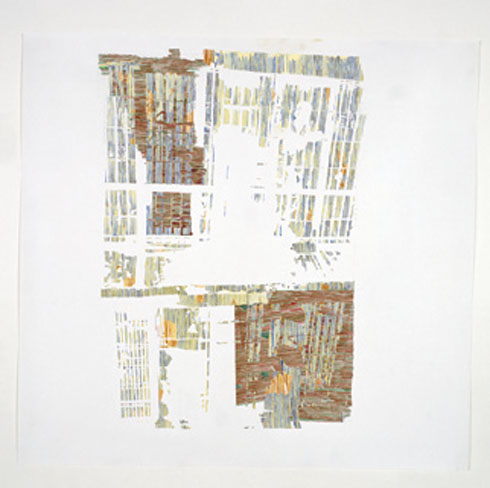
Skaer makes drawings, sculptures and films, often combining them in installations of all three. Her work always begins with an existing image or representation, which she works and reworks, transforming them while retaining a sense of their original meaning and physical form.

Using optical distortion, scale, and immense detail, her drawings are constructed not with the desire to represent an original object but rather with the intention of eliciting a certain experience of reality absent in the primary source: the moment of encounter between image and observer. Skaer’s work underscores that usually overlooked instant in which a viewer recognises an image as an image.

This exhibition is the most substantial presentation of Skaer’s work to date, and offers a chance to assess the development of her practice. Drawings dating from 2001 to 2008 are shown alongside film, installation and sculpture.

Lucy Skaer was one of the six artists chosen to represent Scotland at the 2007 Venice Biennale. She was also shortlisted for Becks Futures in 2003. Joining us to explore the exhibition will be Stacy Boldrick, Adult Education Coordinator at the Fruitmarket Gallery.
Douglas Gordon: Superhumanatural

‘I provide the board, the pieces and the dice, but you are the ones that have to play.

Douglas Gordon

We will be visiting the much-anticipated retrospective exhibition by Douglas Gordon, one of Scotland’s most celebrated contemporary artists. And it doesnt disappoint.

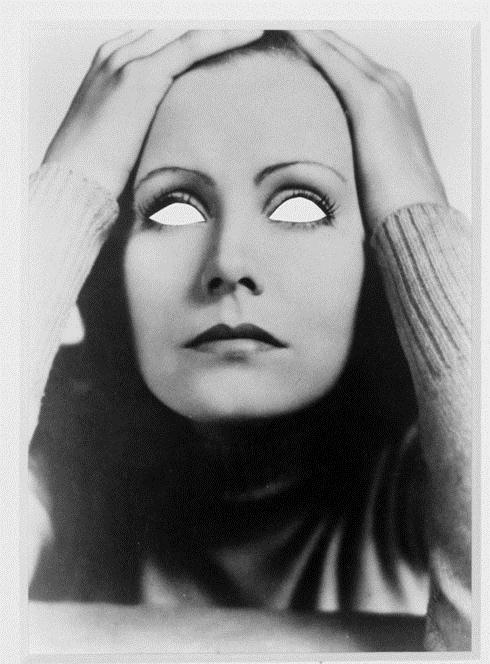
The Royal Scottish Academy Building has been transformed beyond recognition with specially constructed blacked-out spaces, TV monitors and installations where the familiar becomes unfamiliar. Superhumanatural is Gordon’s first retrospective exhibition to be held in Scotland and features key works including 24 Hour Psycho (1993), Through a Looking Glass (1999) and 30 Seconds Text (1996).

Born in Glasgow in 1966, Douglas Gordon was among a number of Glasgow-based artists who embraced a more conceptually-orientated art in the 1990s. His deployment of pre-existing material, most notably in his use of Hitchcock’s iconic film in his work 24 Hour Psycho, attracted particular attention. He won the Turner Prize in 1996, the Premio 2000 at the Venice Biennale in 1997 and the Hugo Boss Prize at the Guggenheim Museum, New York in 1998. Earlier this year, he had a mid-career survey exhibition at the Museum of Modern Art in New York.

Working in video, film, photography, audio and text-based works, he explores themes of trust, guilt, confession, deception and doubling. Many of his works are based on dichotomies – good and evil, life and death, birth and death, perception and memory and seduction and violence.

This is a great opportunity to see a major exhibition of his work. We will be joined by Keith Hartley, curator of the exhibition and Chief Curator and Deputy to the Director at the Scottish National Gallery of Modern Art. Keith, who was the exhibition curator, has been working on the show for a few years and will be able to provide us with a fascinating insight into the works and the man himself.

Seamus Harahan and Bedwyr Williams

Spin keeps the spirit of the 51st Venice Biennale alive with this duo of exciting contemporary artists . . .

For Northern Ireland’s inaugural group show at the Venice Biennale, The Nature of Things (curated by Hugh Mulholland) Seamus Harahan presented the widely acclaimed film Holylands.

Bedwyr Williams was one of four artists who represented Wales as part of the exhibition, Somewhere Else, curated by Karen MacKinnon. Williams spent three months as artist-in-residence on the Venetian island of Giudecca. He produced a series of humorous, tourist-style publicity posters and the very amusing book, Basta, which details his experiences of Venetian life.

Here in Edinburgh, the Collective Gallery have invited both artists to exhibit works that draw our attention to the cultural, economic and political independence that has affected the UK since devolution in 1999.

Seamus Harahan’s Holylands portrays a series of events shot within a short distance of the artists home in Belfast. Filmed in real time over two years, the piece has been edited down to 32 minutes. Like a voyeur spying on other peoples lives, Harahan captures the marginalised and individuals who operate on the edges of society, while at the same time commenting on the lack of social provision that is prevalent in Northern Ireland. You may already have seen his work at Transmission Gallery in 2004. Other past exhibitions include Project Arts Centre, Dublin and group shows at The Irish Museum of Modern Art, Dublin and Lux Center, London.

Bedwyr Williams works in a range of media including performance, installation, video, drawing and photography. For the Collective, he has created an installation entitled Sir Bedivere. Written on the walls of the gallery are cocktail recipes which reveal Williams strong sense of surrealist humour and sharp critical mind. Williams was recently identified by Adrian Searle, art critic for The Guardian, as one of seven artists who will ‘colour the future’. At only 30, he has already had a solo show at Chapter in Cardiff as well as receiving the prestigious Paul Hamlyn Award for Visual Art in 2004.

Spin-off Trip to the Venice Biennale 2005

For our first overseas trip, Spin members visited one of the most exciting, prestigious and significant contemporary art festivals in the world, the Venice Biennale.

The 51st International Art exhibition marked the 110th year of its existence, and surprisingly, the first time that two women had been at the directorial helm. Maria de Corral and Rosa Martinez, art historians, critics and independent curators from Spain, created two very different, but complementary shows that captured the spirit of the international, contemporary art scene. Universally and critically acclaimed, the 2005 Biennale was hailed as one of the most coherent, intelligent and imaginative shows in recent memory.

Held every two years, the Venice Biennale brings together over 70 nations, and among the countries exhibiting in 2005 for the first time, were Morocco, Albania, Afghanistan, China and Northern Ireland. The Giardini, house the official national pavilions (31 in total) which showcase the best of each country’s contemporary artists. In 2005, Britain was represented by the controversial duo, Gilbert and George.

One of the main highlights of the Spin trip, was a visit to the Italian Pavilion in the Giardini. Maria de Corral has curated an exhibition entitled The Experience of Art which presented the work of over 40 established and up-and-coming, international artists. Working in a variety of media, from installation and painting to sculpture and video, artists included Rachel Whiteread, Francis Bacon, Willie Doherty, William Kentridge, Barbara Kruger, Eija-Liisa Ahtila and Agnes Martin.

Members also visited Always a Little Further, curated by Rosa Martinez, housed in the Arsenale – the famous old dockyard of Venice. The work of over 40 international artists was beautifully presented in this unique environment, featuring videos, photography, painting, sculpture and installation. Louise Bourgeois, Mona Hatoum and the Guerrilla Girls feature in the line-up.

Of the 30 collateral exhibitions and events spreading across the city of Venice, Spin members visited Scotland’s second presentation at the Biennale, Selective Memory: Scotland & Venice, housed at the Scoletta, next door to the historical Scuola de San Rocco. Glasgow-based artists Cathy Wilkes, Alex Pollard and Joanne Tatham and Tom O’Sullivan created challenging new work in a visually powerful show. We also visited the Welsh and North Irish pavilions and the presentations from Lithuania, Estonia, Afghanistan, Turkey, Ukraine and Iran.