Tag Archives: Drawing

The Matthew Collings Holistic Art Experience


This month we make our first visit to Scott Lawrie Gallery where we will be joined by the gallery’s founder Scott. The gallery presented its first UK show during the Edinburgh Festival Fringe in 2024 entitled THIS IS NO SAFE SPACE: Art in Capitalist Realism, inspired by the writings of the late Mark Fisher.  

For our Spin visit, we will be visiting the new exhibition The Matthew Collings Holistic Art Experience. Former TV presenter and art critic (This is Modern Art, Channel 4) Matthew Collings has created an immersive installation featuring some 370 drawings covering a vast range of subjects from life, love, politics and death. 

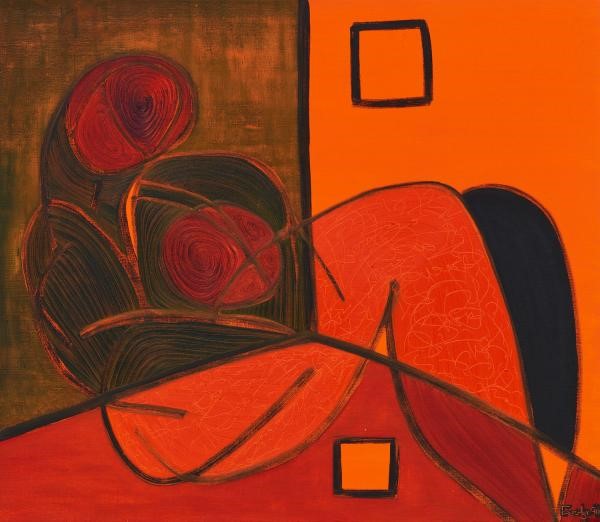
Everlyn Nicodemus

This month we delve into the powerful exhibition by Edinburgh-based artist Everlyn Nicodemus. Born in Kilimanjaro, Tanzania in 1954, this major retrospective covers her 40-year career as an artist.

Her work is in part a physical journey across continents and in part a voyage where she explores her narrative intellectually and emotionally as well as that of individuals and their experiences. Through painting, drawing and collage, she addresses racial perceptions, gender and trauma with beautiful eloquence and compassion. Leading us through the exhibition will be the curator Stephanie Straine who worked closely with Everlyn.

This is an incredible story about an artist who had to take a 25-year hiatus from painting due to practicalities but continued to work and was recently rediscovered by a London gallerist. In 2022, she was awarded a commission from the Freelands Foundation to create a new body of works which we will have the opportunity to survey. Everlyn’s work is deservedly receiving high praise from the critics, it is a ‘must see’ show.

Women in Revolt! Art and Activism in the UK 1970-1990

This month we will be joined by Chief Curator Lucy Askew as we make our way to Modern Two for Women in Revolt! Art and Activism in the UK 1970-1990. 

This touring exhibition is a timely exploration of the work and lived experiences of a post-war generation of women artists that have largely been omitted from art historical narratives. Surfacing the wealth and diversity of work created in the UK during the 1970s and 80s, a period of seismic social and political change, it demonstrates, across a wide variety of mediums including painting, drawing, sculpture, performance, film and photography, how women’s needs were marginalised within mainstream culture and reveals how these artists used radical ideas and methods to confront issues that will resonate with contemporary audiences – from access to healthcare and class struggles to ecological disaster, racism, and misogyny. 

Artists’ Studio Visit: Patriothall

This month we will be heading to Wasps studios at Patriothall in Stockbridge to visit artists Jo Barker, Sara Brennan and Eric Cruickshank. 

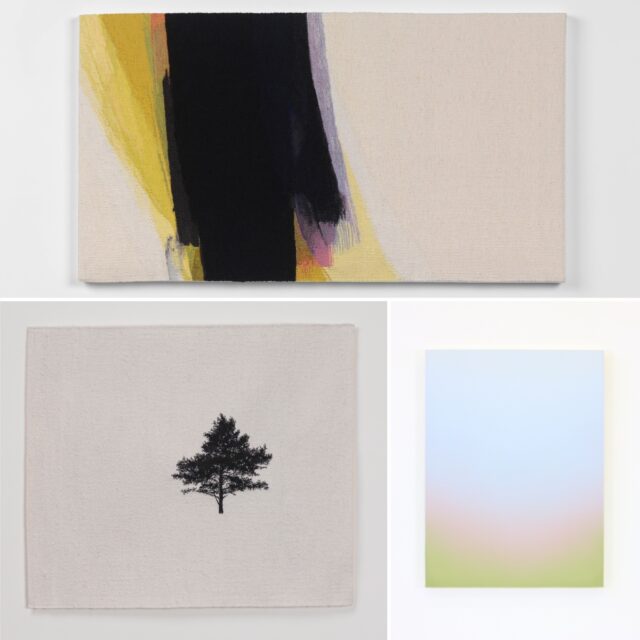
Some may remember Jo Baker from our Zoom session in January 2022, so it will be great for us to meet Jo in person. Her tapestry designs originate from simple gestural brush strokes in paint or ink with smudges of pastels. She is interested in our hands. In the spontaneous mark made by a simple gesture; traces of an event, a fleeting moment. The marks are then captured in the slow considered construction of tapestry weaving. 

Sara Brennan‘s work is an unspoken response to landscape, with routes in a sense of place. Sara uses a refined and reduced approach to colour and form. Her work takes two routes, weaving either from her drawings or reacting and responding in smaller works to yarns as they are placed directly next to each other. The yarns are very specific and often unrepeatable.  

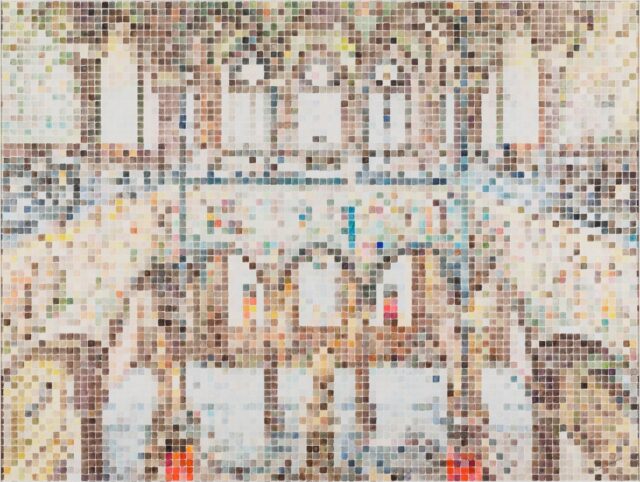
Taking landscape as an initial starting point, Eric Cruikshank’s paintings are not about literal representation, instead the focus is on the emotive qualities of place. Using an objective palette tied to the Scottish landscape, colour acts as a vehicle to reveal the picture planes underlying points of reference; with the works being grounded in the everyday, the viewer is encouraged to readdress notions of their surroundings, where the familiar is opened up and made full of possibility. 

Artists at Work 2

We start the new year with a visit to the Scottish National Portrait Gallery for the second iteration of their colleague exhibition, Artists at Work 2. The exhibition was co-curated by artists Aitor Moncho Tudanca, Darren Duddy, Silvia Barlaam and Victoria Gazeley. 

Artists at Work 2 is an exhibition of art created by staff who work at the National Galleries of Scotland. Many talented artists work across the organisation and this exhibition celebrates their creativity. Following the popularity of the first Artists at Work exhibition in 2018, the exhibition highlights a wide range of artistic disciplines, from painting, drawing, illustration and photography to sculpture and jewellery making. The artists introduce their own work and share insights into their creative process through varied perspectives. 

Andy Warhol and Eduardo Paolozzi: I want to be a machine

For our first event in 2019, we will explore the two parallel displays of work by Andy Warhol and Eduardo Paolozzi.

The exhibition shows the evolution of their art, revealing similarities as well as differences from their interest in popular culture and mass consumerisation to new technologies and the discovery of screen printing in the 1960s. The exhibition also reunites them as in 1968, Warhol and Paolozzi exhibited together as part of a five-person show at the Four Seasons Restaurant in New York.

The title of the exhibition comes from a quote by Andy Warhol when he discovered screen printing which enabled him to make works of art which almost made themselves. ‘That’s what I like, he [Warhol] famously said. I want to be a machine.’

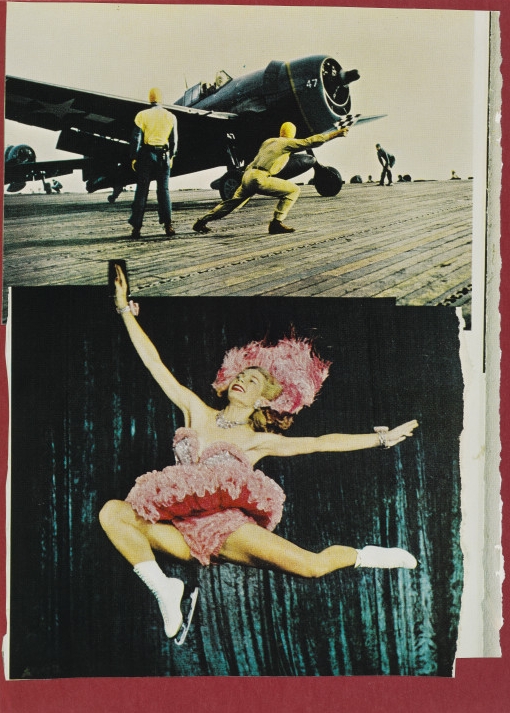
Both artists captured images from photography and advertisements. Warhol traced his images while Paolozzi used collage until they both turned to screen printing to transform photographs into prints.

The exhibition includes rarely seen drawings by Warhol, as well as his famous prints of Marilyn Munroe. Works by Paolozzi include some of his early proto-Pop collages from the early 1950s and Metallization of a Dream in 1963 and key works from the famous 1952 Bunk lecture where he is credited with kick-starting Pop Art.

We will be joined by Dr Glyn Davis, Reader in Screen Studies at the University of Edinburgh to discuss the work of these icons of modern art.

NOW Jenny Saville, Sara Barker, Christine Borland, Robin Rhode, Markus Schinwald, Catherine Street

We’re back at the Gallery of Modern Art to discuss the third instalment of NOW, a series of exhibitions which highlight the range of quality of work being made by artists associated with Scotland and across the globe.

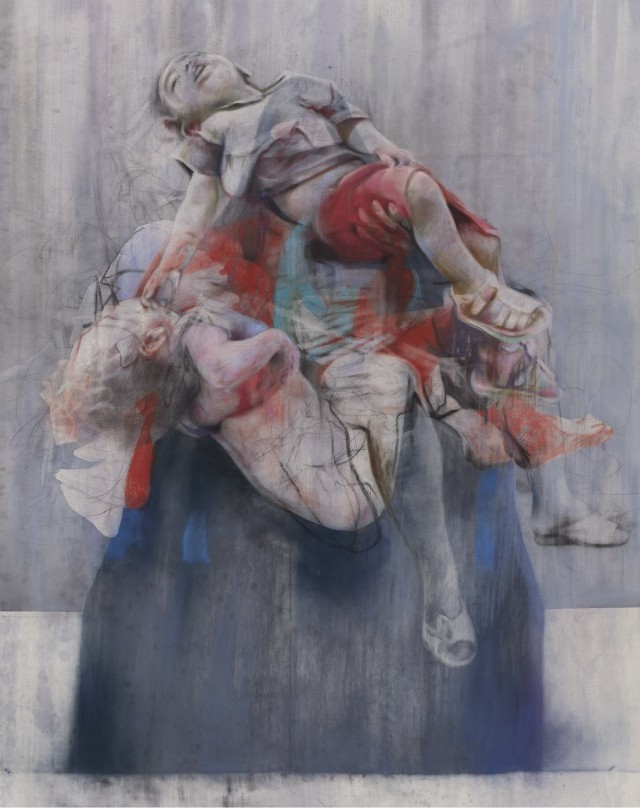
At the heart of the exhibition is five rooms dedicated to British artist Jenny Saville. She is best known for her monumental paintings of the naked female body which she first developed for her graduation exhibition at Glasgow School of Art in 1992. It was during this time that she came to the attention of Charles Saatchi who commissioned Saville to create 15 new works which were later displayed at the Saatchi Gallery.

On show will be paintings and drawings spanning her 25-year career including a new acquisition for the collection – Study for Branded 1992. More recently, Saville has been working with charcoal and pastel in which she layers imagery to suggest movement. She draws from a range of sources including art of the past, graffiti, children’s drawings and ancient myths.

We will be concentrating on Jenny’s work for this session and will be joined by artist Karen Strang, who also studied at Glasgow School of Art, to discuss the work.

Kate Davis: Nudes Never Wear Glasses

For our autumn programme, we will be exploring the work of Glasgow-based artist Kate Davis, in this her first solo exhibition in Edinburgh. Nudes Never Wear Glasses brings together a new photographic series with drawings and two film works on the subject of women’s domestic labour. The title of exhibition refers to a comment made by the photographer Jo Spence.

The film work Weight (2014, 11mins) takes John Read’s 1961 BBC documentary about the artist Barbara Hepworth as its starting point. Replacing references to art with references to housework and childcare, this clever satire explores how televised depictions of creativity have constructed our understanding of artistic production and other forms of labour.

Also on show is the first gallery presentation of her Margaret Tait Award film, Charity (2017, 16mins). This is a witty, filmic essay on the subject to women breastfeeding told through a variety of art historical still imagery, interlaced with moving images of the artist undertaking household tasks and a narration recited by Gerda Stevenson of extracts adapted from the writings of Margaret Tait (1918-1999). Tait was an Orcadian filmmaker, poet, artist and writer whose film poems, hand-painted animations and documentaries were pioneering in the field of experimental filmmaking.

WASPS Artists’ Studios Visit: Louise Fraser, Jenny Pope and Carrie Fertig

This month, we will be visiting three artists who each have a studio at WASPS on Albion Road. Artists include Louise Fraser, Jenny Pope and Carrie Fertig.

Louise Fraser’s practice incorporates drawing, printmaking and sculpture and is a response to the environment she inhabits. Her work draws people’s attention to the space they are in, the space they consume and the space they leave their imprint on.

Jenny Pope creates sculptural pieces inspired by beach-combing, collecting, bone structures and geology working with a range of materials including porcelain, limecrete and found materials. Through her work she explores the changes that happen in our internal lives and externally in the natural environment. Recently, Jenny has been working within a hospital, creating large drawings and wearable sculptures which explore personal space.

Carrie Fertig uses borosilicate glass as the main material in her practice of performance, film, installation, sound and sculpture. From the 20 May-2 July 2017, she will be exhibiting as part of Summa at the Royal Scottish Academy with an installation, sound and performance based on the physical, social and metaphysical events of death. The work she will be showing us concentrates on sound, including work from her group Torcher Chamber Arkestra, which features live music, fire, and digital manipulation of sound on glass instruments that she designs, makes, and repurposes.

This is a great opportunity to meet artists living and working in Edinburgh and to find out more about their working methods and approaches to their art-making

Charles Avery: The People And Things of Onomatopoeia

For our first post-festival Spin event we will be meeting at Ingleby Gallery to talk about their major solo exhibition of new work by Charles Avery entitled The People and Things of Onomatopoeia. The exhibition was a highlight of this year’s Edinburgh Art Festival and included a temporary tree sculpture by Avery sited in Waverley Station during the festival (now relocated to the Parasol Unit gallery in London).

We will be joined by Susan Mansfield, The Scotsman’s Arts Correspondent who will join us to discuss the exhibition. In Avery’s work, the Island is located in the middle of an archipelago of innumerable constituents, and its heart is the port of Onomatopoeia. This town was once a stepping off point for pioneers and travellers, then a bustling boomtown, then a slum in a state of extended decline, and now in the fictional present, it is reborn as a regenerated city of culture and a tourist destination. This exhibition presents a new series of drawings alongside furniture, sculptures and all manner of imported artefacts that come together to describe the culture of Onomatopoeia’s inhabitants.

Elements of The Islanders project have previously been exhibited at the Scottish National Gallery of Modern Art, Parasol Unit, London and Museum Boijmans Van Beuningen, Rotterdam. In 2007 Avery represented Scotland at the 52nd Venice Biennale. The exhibition runs until 3 October 2015.