28 June 2012 at 6pm
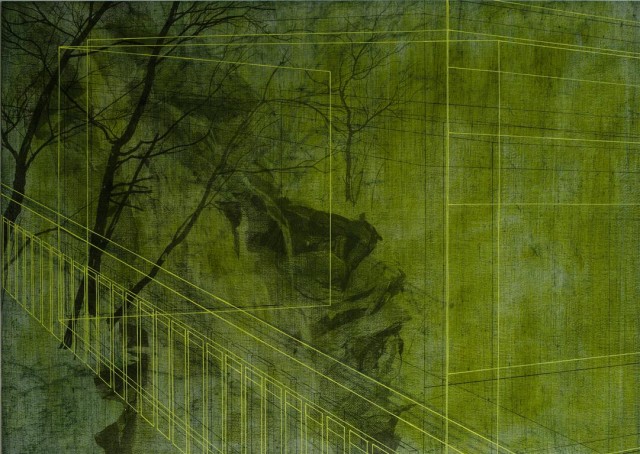
Our July event will take place at the City Art Centre to see a survey of contemporary Scottish drawing showcasing fifteen artists work, all of whom use drawing as an important element in their practice. Artists include: Charles Avery, Moyna Flannigan, Nathalie de Briey, Paul Chiappe, Euan Gray, Alan Johnston, Andrew MacKenzie and David Shrigley.
A Parliament Of Lines gets its name from social anthropologist Tim Ingold’s studies of growth and movement, in particular his observation that ‘everything is a parliament of lines . . . to study both people and things is to study the lines they are made of.’ The exhibition is built around five broad themes: The Body, Architecture/Landscape, Minimal Abstraction, Reproduction/Photography and Sculptural Investigation.
Curated by artist Euan Gray, most of the work has been created specifically for the show and includes Nathalie de Briey’s watercolour drawings of incinerated objects from the Hiroshima bomb site drawn on delicate paper; Paul Chiappe’s extraordinary miniature reproductions of old-school photographs; Shrigley animation entitled Friends; Andrew MacKenzie’s meticulous layered images of landscapes and trees; Moyna Flannigan’s new suite of six drawings in ink and gouache depicting the story of Adam and Eve; and a site specific wall drawing by Alan Johnston.
Drawing is not, as it once was, the foundation on which everything else is built. It is just one option among many, but it has certain intrinsic characteristics, which make it attractive to artists with very different preoccupations.
Joining us to explore these different areas of enquiry will be one of the exhibiting artists, Andrew MacKenzie. Andrew is a painter and an MFA graduate from Edinburgh College of Art. He lives and works in the Scottish Borders and has exhibited with The Contemporary Art Society, London, The Talbot Rice Gallery, Yorkshire Sculpture Park, Leeds and The Paul Khun Gallery in Calgary, Canada.
23 February 2012 at 6pm
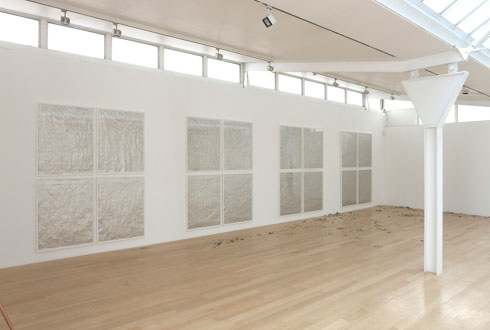
This month we will be visiting The Fruitmarket Gallery to see and discuss the work of Plymouth-born artist Anna Barriball who makes work which moves between the parallel languages of drawing and sculpture.
Barriball often uses the practice of drawing to create something which might be more properly understood to be sculpture.Much of her practice explores and depicts the accretion of time – from the length of time it takes for a candle to burn down to the repetitious activity of taking graphite rubbings from objects that bare the traces of their use or function. Her interventions produce objects that combine a minimalistic rigour and the seemingly endless endeavour to make sense of the world of objects by empirical study.
This exhibition brings together work made over the last ten years, and encompasses drawing, sculpture and video. It includes the kind of works on paper for which Barriball first became known, and also major new commissions: a large windbreak sculpture and a wall drawing.
26 January 2012 at 6pm
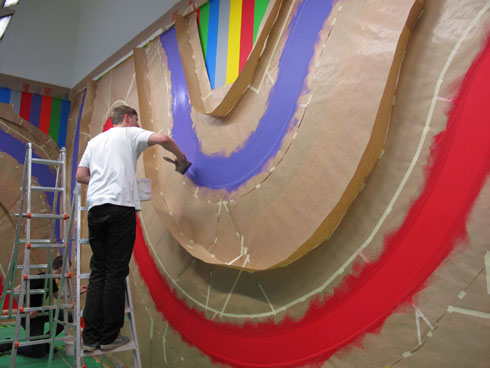
The Sculpture Show is a major new exhibition which uses the extraordinary collection at the Scottish National Gallery of Modern Art to explore the development of sculpture over the last 110 years.
We will start by exploring a striking late work by American Minimalist artist Sol LeWitt which has been specially installed for the exhibition and has never before been on display in Scotland. Wall Drawing #1136 (2004) covers three walls of a single room, and reaches almost 22 metres in length.
We will also be looking at the work of Glasgow-based sculptor, Nick Evans, who has had access to the national collections as part of a National Galleries/Creative Scotland Fellowship. Recently Evans has been interested in the scholarship and history of the encounter between cultures, what is often called exoticism, the way that artists like Gauguin came across Oceanic art or Picasso’s encounter with African art.
Other works to explore will be an enchanting film, The Way Things Go by Peter Fischli and David Weiss which documents a 100-foot causal chain assembled of everyday objects triggered by fire and pyrotechnics; Ron Mueck’s monumental work A Girl (2006); and Simon Starling’s Le Jardin Suspendu (1998), a scale model of a 1920s French Farman Mosquito plane built using the wood from a balsa tree cut in Ecuador.
30 September 2010 at 6pm
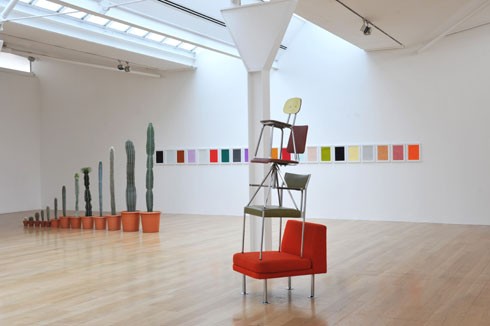
This month, we will be discussing Martin Creed’s major exhibition of new work, Down Over Up. One of Britain’s most highly-regarded and popular artists, he is known for installations such as his 2001 Turner Prize work, No. 227, The Lights Going On and Off and in 2008, No. 850, in which volunteer runners sprinted across the Tate Britain gallery every 30 seconds.
Renowned for his straightforward approach to making art and his deft economy of means, Creed has produced sculptures, installations, drawings, films, performances, music and text, each of which has found its inspiration in the objects and activities of everyday life. Always in search of the essential nature of things, Creed uses the simplest materials to create a world in which reality appears transformed by conceptual rules, as well as by the unexpected breaking of those rules.
‘I want to make things. Im not sure why, but I think its got something to do with other people. I think I want to try to communicate with other people, because I want to say “hello”, because I want to express myself, and because I want to be loved.’ Martin Creed.
23 June 2010 at 6.30pm
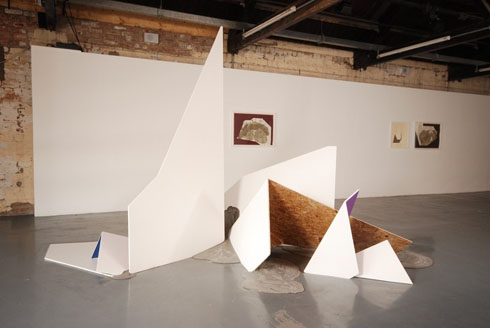
Acclaimed Scottish artist Carla Scott Fullerton has invited Spin members to visit her studio, giving us a rare opportunity to discuss and gain insight into her practice. As well as visiting Fullerton’s studio, we will also have an opportunity to look around the various other artists studios and facilities contained within the Glasgow Sculpture Studios building.
Carla Scott Fullerton’s practice is primarily sculptural, with additional elements such as drawing and printmaking. The materials she uses are sourced from the field of construction – cement, plywood, rebar, graph paper, all elements that make up the foundations of architectural forms.
Fullerton is interested in the moment at which these materials lose their usual restrictions, for example, through the irregular and unpredictable nature of pouring cement. She is interested in how materials speak about the status and economies of a building, its usage, contents and age and in the combined usage of old and new materials.
Fullerton graduated from the MFA at Glasgow School of Art in 2008. She was awarded the prestigious Glasgow Sculpture Studios Fellowship Award in 2008-09.The award is presented to the artist who demonstrates a commitment to maintaining a studio based arts practice and to contemporary sculptural practices. Recent solo presentations of Fullerton’s work include Lines have edges, tentilten, Glasgow and Open Space, Art Cologne 2010. Lines & Pours, Chert Gallery Berlin, breadthless lines, Glasgow Sculpture Studios, Spacioux, Lambretto Art Project, Milan all 2009 and You cant hide your love forever, Tulips & Roses, Vilnius. Fullerton is represented by Chert Gallery, Berlin.
19 May 2010 at 6.30pm
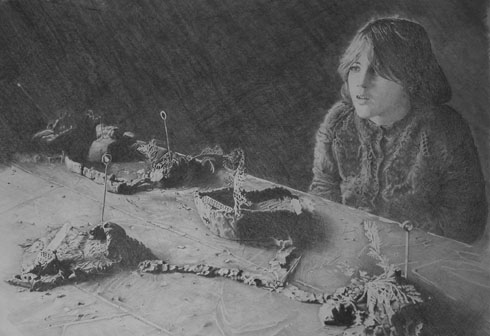
This month we visit the sumptuous and beautifully intimate cinema within GMAC to see the work of the highly acclaimed emerging artist, Corin Sworn, who will personally screen her short films, show slides and talk to us about her emerging practice.
Corin Sworn (born in London 1976, lives in Vancouver and Glasgow) is a visual artist whose work explores issues connected with the process by which subjective experience becomes translated into history. She works with drawing, video and sculpture, and her work has been shown in group exhibitions including: ICA London (2010), Witte de Wih (2010) EASTInternatinal (2009), Kunsthalle Basel (2009), The Contemporary Art Gallery, Bogotá, The Kunstverein Wolfsburg, Participant Inc. New York (2008). A new solo exhibition was presented at the Glasgow International Festival of Visual Arts, and she has a forthcoming solo show at Tramway.
Within her practice, Sworn draws on historical events to produce works that serve the place of artefacts, ephemera or props in a fragmented retelling of some historical, cultural event. These works are not interested in reproducing a specific history but in analyzing some suggestion within it. Throughout this work she has often considered whether mute objects can carry and convey the events they purport to relate to. Or whether they, instead, situate readings that are performed upon them.
For over 20 years, GMAC (Glasgow Media Access Centre) has supported independent filmmakers and the community through access to low cost facilities, equipment and high quality training and production opportunities. GMAC provides a central space and resource for all people interested in film and media. The organisation aims to be a bridge between local communities and the screen industries by providing opportunities and accessible resources for all. www.g-mac.co.uk
25 March 2010 at 6pm

This month, we will be joined by the artist Peter Liversidge to discuss his recently opened exhibition The Thrill of it All. Some of you will remember seeing Peter’s work – Signpost to Jupiter – during our Spin-off trip to Jupiter Artland in 2009.
Any exhibition of work by Peter Liversidge is predicted to present the unpredictable. For more than a decade, Liversidge’s work has encompassed every medium creating paintings and drawings, photograhy, performance and sculpture. The tone of his work shifts from the playful to the poignant, but is always underpinned by a generosity that unifies and characterises his distinct and varied approach.
Given the uncertainty that a Liversidge exhibition presents, every element in an exhibition of his work begins at the artist’s kitchen table with Liversidge sitting alone writing proposals on an old manual typewriter. These hand-typed pages, present an array of possible and impossible ideas for performances and artworks in almost every conceivable medium. In a sense, the first realisation of every work is in Liversidge’s head, then on the page, then in the mind of the reader, and finally as a physical object or happening.
This will be a chance for us to explore the ideas that underpin Peter’s practice and to discover what role we play within his creative process.
26 November 2009 at 6pm
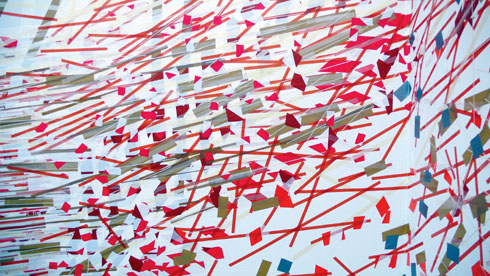
The Fruitmarket Gallery celebrates the contemporary resurgence in drawing, featuring eleven young international artists including Jan Albers, Michael Borremans, Marc Brandenburg, Fernando Bryce, Kate Davis and David Haines.
In the Western tradition, drawing was the foundation of art education, the essential discipline underlying all others. In the second half of the 20th century, a more academic approach to art-making threatened the authority of drawing as a pure art form; as a result, many schools cast it out as a throwback to past times. Recently drawing has returned to the mainstream as a cheap and autonomous activity, a democratically available form of image making, uniquely capable of intimate, spontaneous self-revelation.
This exhibition of new work by eleven highly acclaimed young international artists includes small, intricately-crafted pencil drawings; large scale installations in which the ‘drawn’ lines are made from masking tape; and drawings that mutate into animation.
15 July 2009 at 6.30pm
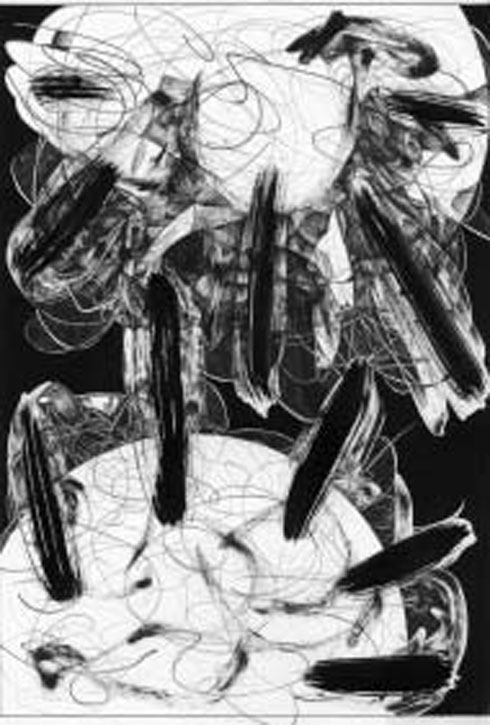
Rob Churm‘s monochromatic drawings are composed with equal parts energy and discipline: densely worked cross-hatching and detailed expressionistic forms are anchored by blank space and crisp graphics. The scenes detailed by his pen are various and often surreal: a giant rose crying in the rain, a Japanese symbol being interrogated under a bare bulb, the words ‘lightning bolt’ buoyed up by a knitted Op Art cloud. Most of all, Churm’s work reverberates with the night atmospheres of the Glasgow bars and clubs where he plays a three stringed guitar and sings in an inimitable style for the band Park Attack. Churm includes intricately drawn posters for dates played by various local bands as part of his oeuvre.
Churm was born In Epping Forest in 1979 and graduated with a BA (Hons) in Fine Art from Glasgow School of Art in 2001. Selected exhibitions include a solo at Sorcha Dallas, Glasgow, and group shows at Broadway 1602, NY (If Not Now), Whitechapel Project Space, London (with SeriPop), The Changing Room, Stirling (DIY:Design it Yourself), Alt Gallery, Newcastle / Centre for Contemporary Art, Glasgow (Harry Smith Anthology Remixed), Collins Gallery, Glasgow (run run), and Glasgow Print Studio (To Bring Forth and Give). Discography, Park Attack: Half Past Human’, (2006), released on Textile Records and Ba-Da-Bing! ‘Last Drop at Hideout’, (2004)
17 June 2009 at 6.30pm
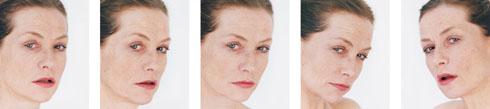
Spin: Glasgow’s first visit to The Common Guild to see work by Roni Horn.
Roni Horn‘s work sets up relationships: between images, between words and between object and viewer. This new exhibition, following Roni Horn aka Roni Horn, her major show currently at Tate Modern, brings together a concise group of works that share Horn’s characteristic evocation of the fine line between sameness and difference. Specifically selected with the artist, in response to the particular characteristics of The Common Guild’s grand but domestic gallery spaces, the exhibition also demonstrates the range of forms in which Horn works – photographic installations, drawing, sculpture and books. Its title comes from the work of legendary Brazilian writer Clarice Lispector (1920 – 1977), via a work included in the exhibition, and is suggestive of the many instances of reflection to be found in this coming together of art and place.
The Common Guild is a not-for-profit visual arts organisation, receiving Flexible Funding from the Scottish Arts Council is dedicated to producing a dynamic international programme of contemporary visual art projects, exhibitions, and events. These include gallery-based exhibitions and ephemeral, non-gallery projects, interventions and collaborations. The Common Guild’s temporary home at 21 Woodlands Terrace is a grand, Victorian townhouse to the west of the city centre next to Kelvingrove Park. Exhibitions take place over two floors, including a unique library, designed by artist Andrew Miller, which will include a selection of Roni Horn’s extensive output of artist’s books and catalogues.
Roni Horn lives and works in New York, where she was born in 1955. She received a BFA from the Rhode Island School of Design and an MFA from Yale University. She has exhibited in major solo exhibitions in Europe and America including at significant institutions such as the Museum of Contemporary Art, Los Angeles, the Dia Center for the Arts, New York and most recently at Tate Modern, Collection Lambert, Avignon, the Whitney Museum of American Art, New York, and the Institute of Contemporary Art, Boston. The numerous important group exhibitions in which she has participated include the Whitney Biennial exhibitions of 1991 and 2004, Documenta IX in 1992 and the 1997 Venice Biennale. She has worked on artist’s books throughout her career, including the multi-volume To Place.


